-5%Rx only
Highnoon Labs
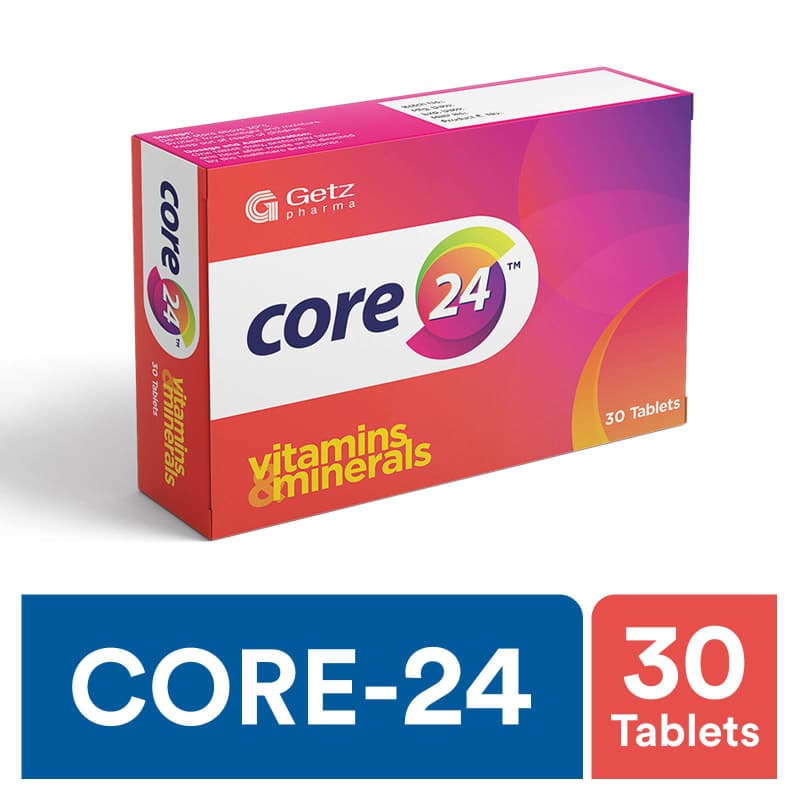
Core 24 Tablets 30s
100g Cream
Rated 3.5 out of 5 (49)
Rs. 1,325Rs. 1,395
In Stock
Free delivery on orders above Rs. 1,500
A tablet containing Calcium , Vitamin D , Vitamin K2, indicated for Bones & Joints Care.
You save Rs. 365
100g Cream
In stock at selected branches
Total for 1 pack: Rs. 2,685
What it is used for: Bones & Joints Care.
Indications as listed by the manufacturer: K-1000 chewable tablets are used to prevent conditions related to calcium and Vitamin D3 deficiency such as: a) Osteoporosis b) Osteomalacia c) Hypoparathyroidism d) Musculoskeletal pain . K-1000 chewable tablets are also used to overcome calcium and Vitamin D3 deficiencies in certain populations and disease states such as:a) Postmenopausal women b) Bone recovery after fractures . K-1000 chewable tablets may also be used to prevent or treat bone-related disorders such as osteoporosis in people taking certain medication.
How it works: It is a combination product containing Calcium, Vitamin D3 (Cholecalciferol) and Vitamin K2 (menaquinone-7) that helps strengthen bones and aids in the treatment/prevention of osteoporosis, osteomalacia, hypo-parathyroidism and other bone disorders or to overcome deficiencies of calcium and Vitamin D3 in certain populations and disease states. It is also used to improve and maintain bone mineral density (BMD), bone health and strength .
Active ingredient: Calcium , Vitamin D , Vitamin K2.
Reported side effects: Common: Constipation or stomach upset may occur. Uncommon: Hypercalcemia/hypercalciuria, Nausea/vomiting, loss of appetite, unusual weight loss, mental/mood changes, change in the amount of urine, bone/muscle pain, headache, increased thirst, increased urination, weakness, tiredness, fast/pounding heartbeat. Rare: Serious allergic reaction, including: rash, itching/swelling (especially of the face/tongue/throat), severe dizziness, trouble breathing .
Known drug interactions: Calcium can decrease the absorption of other drugs such as tetracycline antibiotics (e.g., doxycycline, minocycline), bisphosphonates (e.g., alendronate), estramustine, levothyroxine, and quinolone antibiotics (e.g., ciprofloxacin, levofloxacin). There should be a gap of at least 4 hours when taking these drugs with K-1000. Certain medications can decrease the absorption of Vitamin D3 (bile acid sequestrants such as cholestyramine/colestipol, mineral oil, orlistat). There should be a gap of at least 4 hours when taking these drugs with K-1000. Patients co-treated with cardiac glycosides along with cholecalciferol may be susceptible to high calcium levels and should have ECG parameters and calcium levels monitored. It is recommended to reduce the dose or interrupt treatment if the calcium content in the urine exceeds 7.5 mmol/24 hours (300 mg/24 hours). Simultaneous administration of benzothiadiazine derivatives (thiazide diuretics increases the risk of hypercalcaemia because they decrease the calcium excretion in the urine. The calcium levels in plasma and urine should therefore be monitored for patients undergoing long-term treatment with calcium/Vitamin D3 supplementation.
Take 1 tablet daily after meals or as directed by the physician.
Active ingredient: Calcium , Vitamin D , Vitamin K2.
Store this medicine at room temperature, away from direct light and heat.
Manufactured by K 1000 Chewable Pharmaceuticals (Pvt) Ltd.. Country of origin: Pakistan.
4.0
Rated 4.0 out of 51 verified ratings
The product is genuine but did not suit me personally. Customer service handled the return without any argument.
Rider was on time and the item was properly bubble-wrapped. No complaints.
Fine quality, wrong choice on my part — I should have asked the pharmacist first about the strength.
No issues with the item itself. I would have liked a cold pack for the summer heat.
Been using this for a few months now. Ordering here is cheaper than my local shop and the packing is always careful.
Reviews are from verified Hope Pharmacy orders. We do not remove a review for being critical.
What it is used for: Bones & Joints Care.
Indications as listed by the manufacturer: K-1000 chewable tablets are used to prevent conditions related to calcium and Vitamin D3 deficiency such as: a) Osteoporosis b) Osteomalacia c) Hypoparathyroidism d) Musculoskeletal pain . K-1000 chewable tablets are also used to overcome calcium and Vitamin D3 deficiencies in certain populations and disease states such as:a) Postmenopausal women b) Bone recovery after fractures . K-1000 chewable tablets may also be used to prevent or treat bone-related disorders such as osteoporosis in people taking certain medication.
How it works: It is a combination product containing Calcium, Vitamin D3 (Cholecalciferol) and Vitamin K2 (menaquinone-7) that helps strengthen bones and aids in the treatment/prevention of osteoporosis, osteomalacia, hypo-parathyroidism and other bone disorders or to overcome deficiencies of calcium and Vitamin D3 in certain populations and disease states. It is also used to improve and maintain bone mineral density (BMD), bone health and strength .
Active ingredient: Calcium , Vitamin D , Vitamin K2.
Reported side effects: Common: Constipation or stomach upset may occur. Uncommon: Hypercalcemia/hypercalciuria, Nausea/vomiting, loss of appetite, unusual weight loss, mental/mood changes, change in the amount of urine, bone/muscle pain, headache, increased thirst, increased urination, weakness, tiredness, fast/pounding heartbeat. Rare: Serious allergic reaction, including: rash, itching/swelling (especially of the face/tongue/throat), severe dizziness, trouble breathing .
Known drug interactions: Calcium can decrease the absorption of other drugs such as tetracycline antibiotics (e.g., doxycycline, minocycline), bisphosphonates (e.g., alendronate), estramustine, levothyroxine, and quinolone antibiotics (e.g., ciprofloxacin, levofloxacin). There should be a gap of at least 4 hours when taking these drugs with K-1000. Certain medications can decrease the absorption of Vitamin D3 (bile acid sequestrants such as cholestyramine/colestipol, mineral oil, orlistat). There should be a gap of at least 4 hours when taking these drugs with K-1000. Patients co-treated with cardiac glycosides along with cholecalciferol may be susceptible to high calcium levels and should have ECG parameters and calcium levels monitored. It is recommended to reduce the dose or interrupt treatment if the calcium content in the urine exceeds 7.5 mmol/24 hours (300 mg/24 hours). Simultaneous administration of benzothiadiazine derivatives (thiazide diuretics increases the risk of hypercalcaemia because they decrease the calcium excretion in the urine. The calcium levels in plasma and urine should therefore be monitored for patients undergoing long-term treatment with calcium/Vitamin D3 supplementation.
Take 1 tablet daily after meals or as directed by the physician.
Active ingredient: Calcium , Vitamin D , Vitamin K2.
Store this medicine at room temperature, away from direct light and heat.
Manufactured by K 1000 Chewable Pharmaceuticals (Pvt) Ltd.. Country of origin: Pakistan.
4.0
Rated 4.0 out of 51 verified ratings
The product is genuine but did not suit me personally. Customer service handled the return without any argument.
Rider was on time and the item was properly bubble-wrapped. No complaints.
Fine quality, wrong choice on my part — I should have asked the pharmacist first about the strength.
No issues with the item itself. I would have liked a cold pack for the summer heat.
Been using this for a few months now. Ordering here is cheaper than my local shop and the packing is always careful.
Reviews are from verified Hope Pharmacy orders. We do not remove a review for being critical.
 AbbottK 1000 Chewable Tablets 30sRs. 2,685Rated 4.0 out of 5
 Highnoon LabsJardin D 5mg Tablets 10sRs. 1,795Rated 4.5 out of 5
 Highnoon LabsContour Capsules 20mgRs. 695Rated 4.5 out of 5
Bundle total
Rs. 5,175Rs. 5,835
7 min read · Hope Pharmacy Wellness Team
7 min read · Dr. Ayesha Siddiqui
8 min read · Dr. Ayesha Siddiqui
Information on this site is for general guidance and is not a substitute for professional medical advice. Always consult your doctor or pharmacist.
You might also like